










anim

engineering innovation for decentralized resource recovery

keeping materials in circulation

We engineer modular, closed-loop systems for industry, government, and remote communities – turning waste into valuable resources at every step.

We design and optimise circular supply chains that transform waste into valuable resources

Our Purpose

Enabling circularity through modular innovation.
Circular Seed develops decentralized, mobile infrastructure that empowers industries and communities to recover and repurpose complex waste streams at the source. Our mission is to build scalable systems that drive local value, reduce environmental harm, and make circular supply chains a reality — anywhere they’re needed.

About Us


At Circular Seed, we engineer decentralized, modular waste solutions that enable industries, government agencies, and remote communities to recover value from complex waste streams — right at the source.

Founded in 2018, we specialize in the design and deployment of mobile, closed-loop systems that transform hard-to-recycle materials into usable resources. Our work spans the full lifecycle of circular infrastructure — from feasibility and material analysis to implementation and ongoing technical support.

Combining advanced engineering with a deep understanding of local contexts, our bespoke systems are built to operate where traditional infrastructure cannot — minimizing environmental impact while maximizing material recovery and economic opportunity.

We believe waste should never be a dead end. Through consultation, testing, and capacity building, we help clients build the foundations of a circular economy — one system, one site, one solution at a time.

Our Vision

A future where waste is no longer a liability but a local asset—transformed through intelligent, decentralized systems into circular value for industries, governments, and communities alike.

Our Mission

To engineer and deploy modular, site-specific waste solutions that close the loop on material flows—recovering, repurposing, and regenerating resources at the source.

We achieve this through:

Our Team

Meet the passionate innovators and sustainability experts behind Circular Seed

Our Solutions

Plastic Shredders

Modular shredders to process soft and hard plastics at sources. Our shredders are designed for mobility and ease for use, allowing communities to process waste locally or in-situ for remote, regional, local/island communities and industries.

Plasloop Units

Our PLASLOOP mechanical press units are designed to transform low value and mixed plastic waste into high-quality, durable products such as pavers, benches, and construction components. Built for efficiency and adaptability, this technology compresses shredded soft and rigid plastics into moulded forms without the need for washing, segregation or sorting. Ideal for community-led manufacturing or industrial applications, PLASLOOP enables a circular solution that turns plastic pollution into practical infrastructure for remote, regional, local/island communities and industries.

Plaspol Technology

PLASPOL is our decentralised pyrolysis technology that converts non-recyclable plastic waste into valuable fuel products such as pyrolysis oil/fuel and gas. Designed for flexible deployment, these systems provide an on-site solution to manage plastic waste while generating usable energy resources. By turning discarded materials into fuel, PLASPOL reduces environmental impact and creates circular value for remote, regional, local/island communities and industries

Charpol Production

CHARPOL is our modular solution for converting organic and agricultural waste into high-quality biochar. Engineered for sustainability and impact, these systems support regenerative agriculture by enhancing soil health, improving water retention, and sequestering carbon. CHARPOL not only diverts biomass waste from open burning or landfill but also creates a valuable resource for farmers and land stewards committed to sustainable practices.

AQUALOOP Technology

AQUALOOP is our innovative system that transforms human urine waste into potable water and ammonia through a compact, decentralized process. Designed for remote islands, off-grid, events, or camp site AQUALOOP closes the loop on sanitation by recovering valuable resources at the source. This circular solution not only conserves water but also generates ammonia for potential use in agriculture or industry—turning waste into opportunity with zero discharge.

At source food waste processing

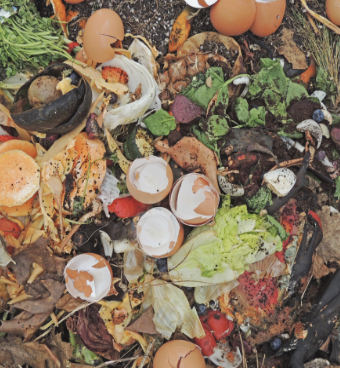
GAIA LOOP is our innovative process that transforms food waste into a valuable, dry, nutrient-rich by-product that can be used for gardening or for BioChar production with our Charpol technology. It is the ideal in-situ food waste processing solution for your homes, offices, cafes and restaurants. Fits seamlessly in your space and only needs a standard wall plug to operate.

Case Studies

Discover how our solutions are making a real impact across different communities and industries.

Coastal Community Recycling

Discover how a coastal village turned the tide on plastic pollution by using our mobile shredder & processing unit to transform discarded plastic into durable, locally made products. What began as a cleanup effort is now a self-sustaining recycling initiative empowering the community and preserving the shoreline.

Agriculture Waste to Biochar

A farming cooperative’s journey to carbon-negative agriculture using our biochar technology.

Indonesia

Community Soft Plastic Trial

What happens when a shopping centre commits to circularity? At Floreat Forum, we collected and processed low-value soft plastics using our mobile mechanical unit, converting them into long-lasting pavers used for local landscaping. A real-world example of closing the loop at the source.
Floreat, Wa

Ghost Net to Good Use

In collaboration with local partners, we piloted a solution to recover ghost nets and ocean-bound plastics from coastal communities. These materials were shredded and processed into useful products—turning a marine threat into a material of value.
Northern Teritory

Decommissioning Waste Recovery

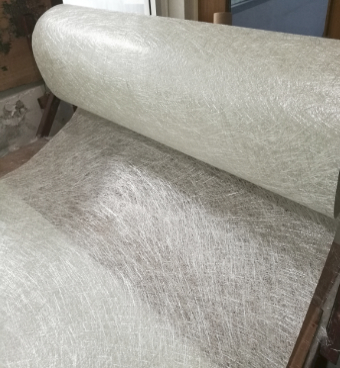
As part of a circular R&D partnership, Circular Seed worked with a leading oil and gas company to develop a novel recovery pathway for glass reinforced epoxy (GRE) waste generated from offshore decommissioning activities. Traditionally landfilled due to its composite nature, our team conducted material testing and process trials to convert shredded GRE waste into durable building products such as pavers and bricks. The project successfully demonstrated proof-of-concept for converting legacy infrastructure waste into circular assets, reducing disposal costs and unlocking new value streams.
Western Australia

Recovery of Mining Screen Panels

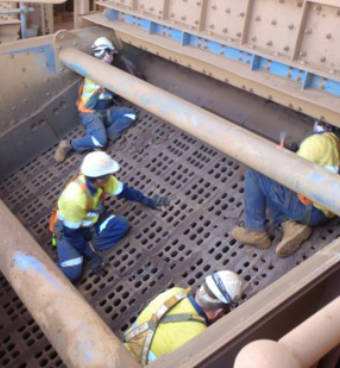
We are currently collaborating with a major mining Original Equipment Manufacturer (OEM) to develop a comprehensive recovery pathway for decommissioned mining screen panels—complex assemblies composed of polyurethane (PU), steel, and rubber. Our R&D efforts focus on mechanical separation, component identification, and reprocessing methods that allow for the selective extraction of metal, rubber, and polymer materials. The project aims to replace landfill with a closed-loop model while identifying potential end-use markets for each recovered stream. Initial lab trials are underway, with field-scale testing to follow.
Western Australia

Upcycling Graphite Offcuts

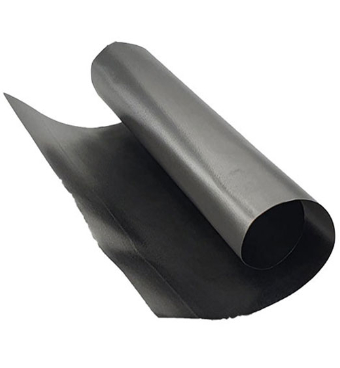
In partnership with an oil and gas equipment supplier, Circular Seed explored the recovery and repurposing of graphite offcuts generated during component manufacturing. Through a series of lab-scale trials, we assessed particle size, purity, and thermal conductivity properties to evaluate the material’s potential as a high-value additive in battery, capacitor, and thermal management applications. The outcome of the study presents a viable pathway for converting industrial graphite waste into an input for energy storage and circular electronics.
Western Australia

Decommissioning of Subsea cables

Working with a leading offshore operator, Circular Seed undertook a detailed study of umbilical cable decommissioning waste, which contains tightly bound metal cores, mixed polymers, and insulation materials. Our approach combined mechanical separation and targeted pyrolysis techniques to break down the non-recyclable polymer layers into usable oil and gas fractions, while recovering metallic components separately. This pilot demonstrated the potential of pyrolysis-based recovery for complex composite waste, with broader applications across the oil and gas sector’s ageing infrastructure.
Western Australia

Mixed E-Waste Plastic Recovery

Electronic waste is one of the fastest-growing waste streams globally—and a significant portion of it is non-recyclable mixed plastics. Circular Seed conducted an R&D-led pilot to recover and process mixed plastic fractions from e-waste, such as ABS, HIPS, and PC blends, using our modular PLASLOOP mechanical press unit. Through careful sorting, shredding, and thermal pressing, these low-value plastic streams were transformed into durable building materials including pavers, beams, and outdoor products. This case study demonstrated the technical feasibility and circular potential of diverting e-waste plastics from incineration or landfill, while supporting sustainable manufacturing.
Western Australia

Community at the Centre

Training locals to becomes waste innovators and operators of decentralised systems. We believe in empowering communities with the skills and knowledge to manage their own waste solutions.

From Waste to Worth

Explore sustainable products created from recycled materials – planters, pavers, benches, and more.

Recycled Planters

Made from mix of low value plastic and industrial waste.

Eco Pavers

Made from mix of low value plastic and industrial metal dust.

Community Benches

Built to last from mixed low value hard plastic materials.

Plastics to Oil

Transforms multi-layer films into high-quality energy products.

Our Ecosystem Partners

We collaborate with leading organizations across sectors to create sustainable waste management solutions.

Research & Development

At Circular Seed, R&D is the backbone of our innovation. We focus on turning complex, low-value waste—like soft plastics, ghost nets, and industrial residues—into useful, certified products through modular, decentralised technologies.
We conduct:
Our science-led approach ensures every solution is practical, measurable, and scalable—helping communities and industries build circular systems where they’re needed most.

Follow our Journey

SBS World News

Oil pollution is a major problem worldwide, scientists say hundreds of animal species like turtles, sea birds and fish are at risk of disease and poisoning.

SBS Newsarticle

Oil spills, plastic pollution and chemicals are slowly poisoning the world’s waterways and oceans, according to global research.

SBS Native language article

தமிழ் நாட்டிலிருந்து ஆஸ்திரேலியாவிற்குக் குடிவந்துள்ள நரேன் சுப்ரமணியம் அவர்கள் சுற்றுச் சூழலைப் பாதுகாக்க, தனது அறிவைப் பயன்படுத்தி ஒரு நிறுவனத்தை ஆரம்பித்துள்ளார்.

Indo Pacific Plastic Innovation Network

Circular Seed is addressing Vietnam’s pressing issue of plastic waste management as the country moves towards a ban on single-use plastic bags and products by 2031.

CSIRO RISE accelerator

Circular Seed is tackling the complex issue of decentralised waste management, with a focus on specialised waste streams that are notoriously difficult to recycle or recover.

Peer-to-peer collaboration

Entering overseas markets presents challenges for startups and small-to-medium enterprises (SMEs), including navigating new regulations, cultural differences and establishing local networks.

Innovation Booster Grant 2024 Receipient

26 businesses have each received up to $40,000 each to assist in their early steps towards commercialisation through the latest round of the Innovation Booster Grant program, funded by the New Industries Fund.

West Tech Fest 2024 Speaker

Our speakers represent the very best in the international and Australian tech startup ecosystem. As founders and investors themselves, they are ready to share their triumphs and learning experiences.

Climate change & conservation

Curtin University is taking Western Australia’s globally renowned sustainability strengths to the world, inviting members of the Bangladesh Ministry of Industries to see firsthand how they can move towards a greener economy.

Team WA to SWITCH 2025

Circular Seed Pty Ltd has been selected as part of the official Western Australian delegation to the Singapore Week of Innovation and Technology (SWITCH) 2025 — through the West Tech Fest x SWITCH Singapore Mission, proudly supported by the WA Department of Energy and Economic Diversification and West Tech Fest.

CNN NEWS 18

Narendran Subramaniam, a Chennai-born mechanical engineer now based in Australia, is exploring how waste can be transformed into valuable resources

Get in Touch

    Scroll to Top

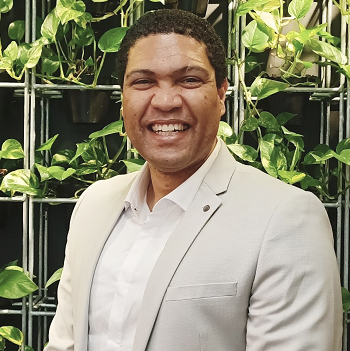
    Robert brings a unique blend of corporate expertise and grassroots environmental leadership to Circular Seed. Following a successful career in telecommunications, digital technology, and marketing, he shifted focus to environmental advocacy, leading a community science project aimed at improving water quality in the Tuggerah Lakes and estuaries. As part of the Central Coast Council’s ChangeMakers program, he secured a grant to pilot a stormwater management solution for the region. Robert’s strategic insight, systems thinking, and deep commitment to sustainability make him a valuable contributor to Circular Seed’s mission.

    Marc Kuhl brings a wealth of expertise in marine operations, with a longstanding career spanning both the commercial and private maritime sectors. Holding qualifications as a Master Class 4 Captain and Chief Engineer MED II, Marc has led diverse marine projects with a focus on operational excellence, safety, and environmental stewardship. His deep understanding of marine logistics and infrastructure adds strategic value to Circular Seed’s initiatives, particularly in ocean-bound and coastal waste recovery.

    Anastasia Gazis has been a pioneer in sustainable design since the early 1990s, when she launched Eco Clothing as a young fashion designer. With a lifelong commitment to circularity, she now champions systemic solutions across industries through strategic investment and collaborative innovation. Anastasia currently leads the establishment of Slow Fashion Hubs across Australia and plays a key role in advancing circular pathways for soft plastics and other hard-to-recycle materials through her partnership with Circular Seed. Her visionary approach and cross-sectoral expertise bring critical insight to the board’s mission.

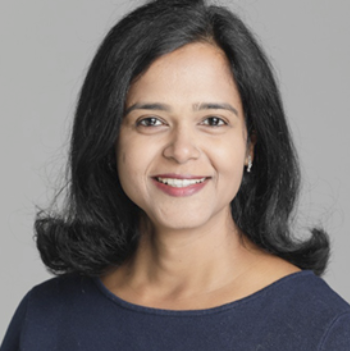
    Lavanya is an environmental engineer with close to 10 years’ experience in a multitude of fields including air quality, greenhouse gas, energy auditing, sustainability and climate change. Lavanya has experience undertaking air quality impact assessments, energy efficiency audits and assisting clients in National Greenhouse Gas and Energy Reporting System (NGERS). She has undertaken greenhouse gas impact assessments for both Australian and International projects including the IFC and EBRD funded projects and undertaken climate change risk assessments under Equator principles.

    Sethuraman Subramaniam brings decades of deep scientific and engineering expertise to the team, having served as a Research Scientist at the Indira Gandhi Centre for Atomic Research (IGCAR), one of India's premier nuclear research institutions. Now retired, he lends his extensive experience in materials science, reactor technology, and systems engineering to support innovation and technical rigor within the startup environment. His methodical approach, research mindset, and mentorship play a key role in shaping scalable and science-backed solutions.

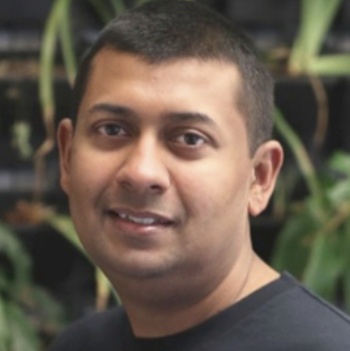
    Narendran Subramaniam is a mechanical engineer, innovator, and founding director of Circular Seed. With a background in Formula 1, aerospace, and mining, he now applies engineering expertise to tackle real-world waste challenges. Naren designs decentralised, locally driven solutions that empower regional and remote communities to manage waste sustainably. His work shifts waste from burden to opportunity by creating local jobs, reducing environmental harm, and championing technology that’s accessible, impactful, and built for social good.